
A casino review is most useful when it separates the information supplied about a brand from the mechanisms of gambling itself. The welcome promotion associated with Zepplin Casino is described as 100% up to €1,000 + 100 free spins. Curaçao is mentioned in connection with licensing. Neither item establishes the identity of the business responsible for a particular website or its authority to accept players in a particular country.
This overview takes a closer look at the financial and practical meaning of common casino features. It explains how game outcomes are calculated, why different balance types matter, what a payment record can establish and how to interpret licensing references. The examples cover the wider gambling industry rather than presenting a simulated test of the Zepplin platform.
| Stated welcome promotion | 100% up to €1,000 + 100 free spins |
| Licensing reference | Curaçao |
| Common game formats | Video slots, roulette, blackjack, live dealer games |
| International payment examples | Visa, Mastercard, PayPal, Skrill, Neteller |
| Mobile interfaces | Responsive sites, browser shortcuts and apps |
| Legal access | Subject to local gambling regulations |






Reading a casino overview as evidence
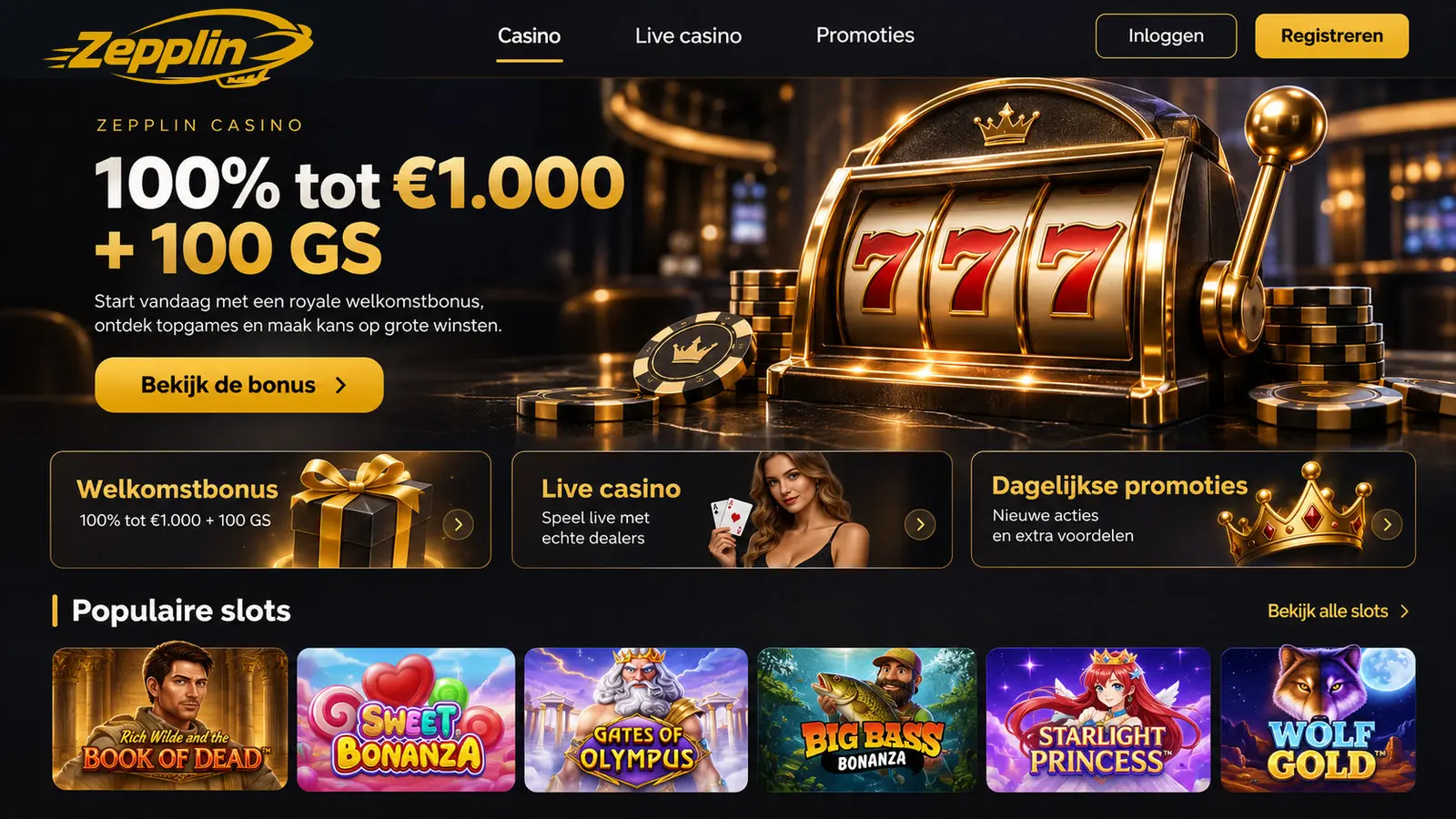
A collection of promotional claims is not equivalent to a product inspection. A reader might encounter a welcome graphic, a catalogue of game providers and a row of payment logos on a review page. Those elements can indicate topics worth researching, but they do not establish commercial relationships, contractual rights or successful transactions. A meaningful review should explain where a description ends and where a reader would need primary documentation to reach a firm conclusion.
Brand names are also capable of appearing on unrelated websites. Even a difference in spelling or domain extension can point to a different operator or an unofficial imitation. The legal entity appearing in the contractual terms is a more useful identifier than a visual brand mark. Consumer protection depends in part on identifying the correct counterparty before sharing information or entering into a financial arrangement. A review should not be mistaken for the operator's own records or terms.
The licence question comes before the games
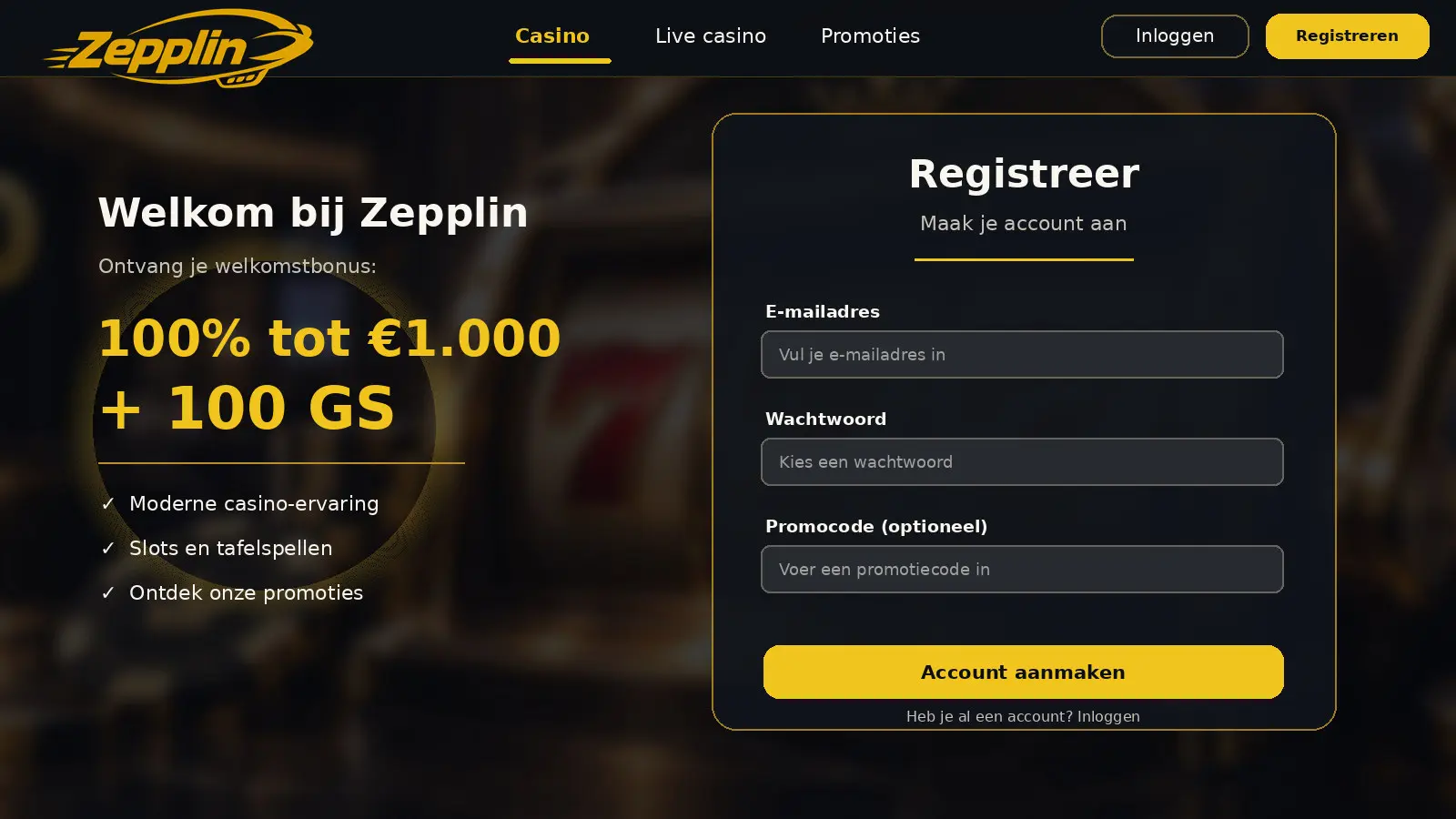
Curaçao is a jurisdiction with a gambling licensing framework, but the jurisdiction alone is not a licence certificate. An assessment would require the relevant legal entity, the applicable authorisation and its relationship to the exact online service. A reference to a regulator in a footer does not show whether an authorisation is current, whether the listed activity is covered or whether the document relates to the website in question.
International licensing does not create automatic permission to provide gambling services everywhere. A country can impose its own licensing requirement, age threshold and restrictions on remote gambling. A service may be authorised in one location while being restricted in another. Local rules matter even when the website offers a familiar language or accepts a widely used currency. A device that can load a website is not evidence that participation is permitted.
Regulatory questions have practical implications beyond the initial decision to use a service. A complaint process may depend on the operator's legal address and the authority responsible for supervising it. An offshore authorisation may not provide the same remedies as a domestic regime. Where the operator's identity or local permission cannot be established, the prudent course is not to proceed with gambling transactions.
The welcome offer in financial terms
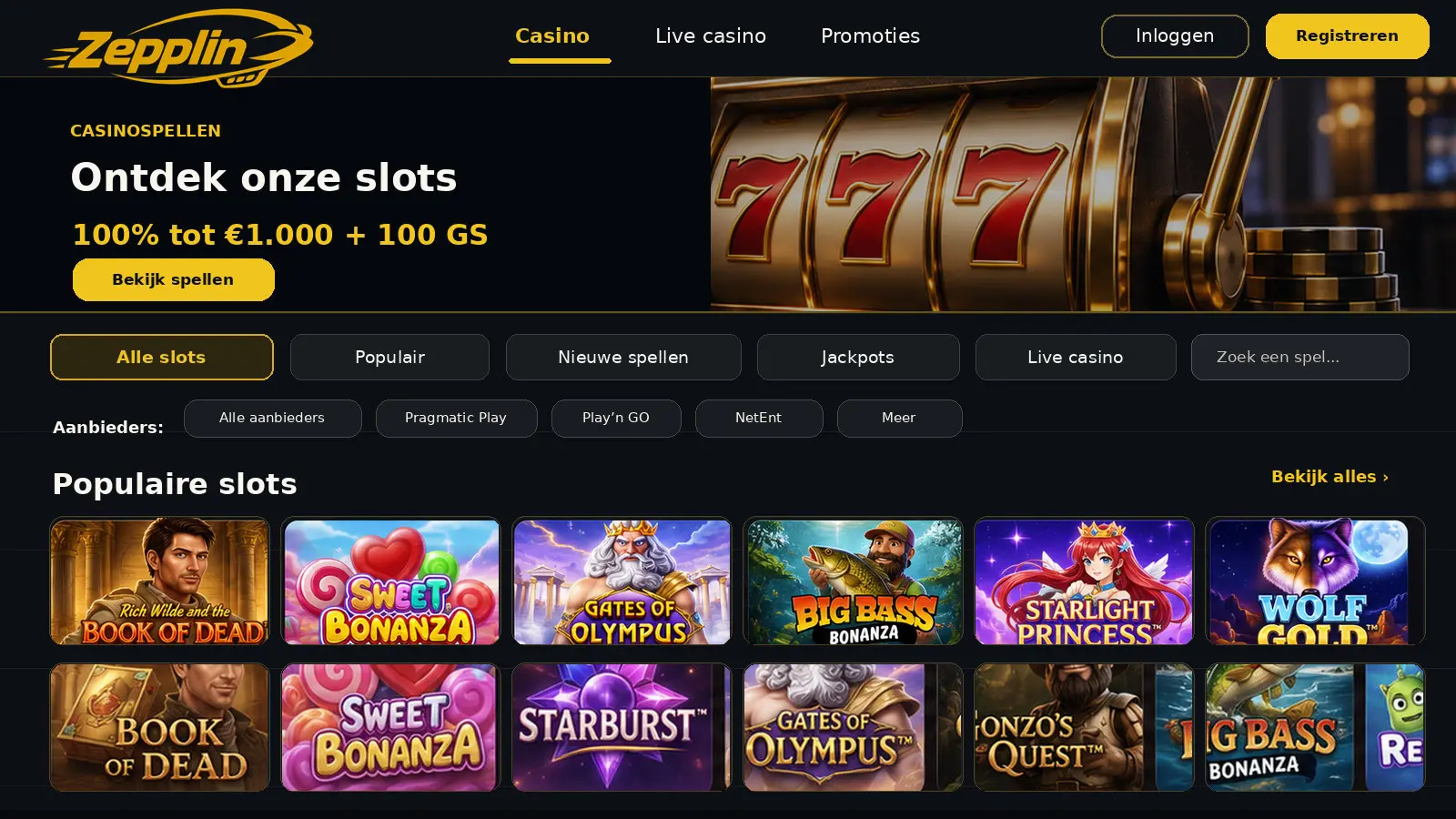
The stated Zepplin promotion combines a percentage match with a fixed allocation of free spins. The percentage describes the potential amount of promotional credit relative to an eligible deposit. The monetary cap is a ceiling on that credit rather than a promised cash payment. The number of spins describes the number of promotional rounds; it does not tell a reader the value per round or the likelihood of winning anything.
Imagine a generic match promotion where an eligible payment of €80 produces an additional €80 in bonus credit. A display might show a combined balance of €160 while allowing the original funds and the promotional amount to be treated differently. The combined number does not answer whether either amount can be withdrawn at that moment. Conditions can affect how real funds are spent, how promotional funds are used and what happens when a promotion is cancelled. This illustration is not an additional Zepplin offer.
Promotional terms may include a turnover requirement, a deadline or a restriction on the value of individual wagers. These features affect the amount of exposure to gambling losses involved in using the credit. A larger headline figure is not necessarily more beneficial to a consumer. It can come with more restrictive conditions or simply create pressure to spend more than planned. Declining an offer is always a legitimate choice; there is no financial need to complete a promotional challenge.
How casino software represents game outcomes
The appearance of a game screen is only one part of its operation. A slot may have spinning reels, animated objects or a grid that changes after a winning pattern appears. What determines a payment is the underlying set of rules and the outcome produced for that round. On games using a random number generator, the visible animation represents a generated result rather than a physical process a player can steer through timing or repeated button presses.
Paytables describe the combinations or events associated with particular awards. Some games pay along defined lines, while others evaluate clusters or combinations across several positions. The total number of ways to win is not directly comparable across games without considering stake structure and payouts. A visually elaborate game can produce small returns relative to the amount risked. The design is not a measure of a player's likelihood of ending a session with money left.
A feature round can have rules that differ from those of the ordinary game. Multipliers and additional symbols may alter how awards are calculated, and an advertised maximum prize may require an exceptionally unusual outcome. The maximum is not an average or an expected result. Buying a feature, when such a mechanism exists, also involves a different cost from the normal base game. It should never be regarded as a way to guarantee recovery of earlier losses.
The distinction between a return and a profit
Suppose a player wagers two units and receives one unit back. The screen might display an award even though the player's funds have decreased by one unit. Repeated displays of awards can therefore create a misleading impression of success. The useful financial measure is the overall movement of funds after accounting for every amount placed at risk. The presentation of individual rounds is not a substitute for a record of money spent.
Return to player, or RTP, refers to a theoretical relationship between stakes and payouts over a very large set of outcomes. It does not promise that a particular percentage will be paid back to an individual during one session. Variance describes another part of the picture: two games with the same theoretical return can distribute awards in substantially different patterns. A long sequence of poor results does not mean that a large payout is due next.
A progressive jackpot is a separate example of how a large displayed amount can distract from probability. Some jackpot systems accumulate contributions under predefined rules, and the eventual award may depend on specific game events. The value shown is not a personal account balance and does not become more accessible because a player has already lost money. There is no obligation to continue participating as a displayed prize grows.
Table games, dealers and different interfaces
In roulette, the wheel and the betting layout determine the possible outcomes and their associated payouts. A bet covering more numbers generally has a different payment structure from a bet covering a single number. The house advantage remains relevant, regardless of the sequence of previous results. A pattern on a history panel describes past events; it does not instruct the wheel how to behave during the next independent spin.
Blackjack combines random card distribution with decisions made under the rules of a particular table. The dealer's required actions and rules for special hands can affect the mathematical characteristics of a variant. Familiarity with the game does not remove the possibility of losing successive wagers. Treating decisions in a game as a professional income opportunity misunderstands the nature of ordinary casino play.
Live dealer games add a video feed and a remote interface to the experience. A player might see the dealer close betting before the local device has displayed the corresponding visual cue. The record maintained by the game system is distinct from the video received on a mobile connection. Streaming quality can improve the viewing experience, but it does not demonstrate game fairness, establish the legal status of the operator or ensure that a disputed transaction will be resolved.
Game providers and the limits of catalogue information
Software companies such as Evolution, Play'n GO, NetEnt and Pragmatic Play illustrate the variety of suppliers in the wider industry. Their products include different kinds of slot mechanics and, in some cases, streamed table formats. A particular online casino's catalogue depends on its agreements, the relevant market and the versions of games permitted in that market. These names should not be understood as a verified list of suppliers to Zepplin Casino.
Categories in a lobby are often editorial or commercial rather than mathematical. The labels popular, new and featured may simply describe how content has been arranged. A newly released game is not inherently fairer, safer or more likely to return money than an older release. Likewise, a game that is frequently played does not become a better financial proposition because other players have selected it. Reviewing game categories is primarily a way to understand the interface.
International payment terminology
Online payment systems commonly include bank cards such as Visa and Mastercard, transfers through banking networks and electronic wallet services such as Skrill, Neteller or PayPal. The functions available to a user depend on the financial institution, the merchant's arrangements and the rules applicable to the transaction. A card accepted for everyday shopping may be blocked for gambling payments. These industry examples do not establish that a given method is accepted by Zepplin.
A payment can be authorised at one point and settled at another. A receipt from a financial institution may show that the user's request was approved without proving that the recipient has credited the funds. Similarly, a withdrawal that is marked approved in a merchant interface may still be moving through another payment system. It helps to distinguish the operator's internal status from the financial provider's final transaction record.
International payments may also involve exchange rates, service fees or additional checks on the origin of funds. The amount displayed in euros does not mean that all transactions are settled in euros. Digital assets create further considerations because their market prices can change and transfers may be difficult or impossible to reverse. A claim that a certain method is fast should not be interpreted as a guarantee that an individual payment will arrive within a particular period.
Mobile design is not the same as a mobile application
Responsive layouts are a common way for websites to adapt to phones and tablets. Browser compatibility, touchscreen controls and the visibility of essential information are separate from the existence of a downloadable native application. Safari and Chrome are familiar mobile browsers, but neither establishes that a particular platform has undergone testing on a given device. A shortcut on a home screen may simply open a web page.
A downloadable package from an unfamiliar source can request access to files, notifications or other device functions. Its appearance may closely imitate an established brand. Device permissions should make sense in relation to the software's actual purpose. A gambling-related notification can also influence behaviour by encouraging a person to return at an unplanned time. Disabling unnecessary notifications or removing the software altogether can help restore control over attention and time.
Data and identity in an account relationship
Businesses that handle gambling transactions may have obligations involving identity checks, age restrictions and financial crime prevention. Those obligations do not make every request for a document legitimate. The identity of the recipient, the purpose of collection and the handling of the resulting information all matter. A request sent through an unrecognised messaging account could expose highly sensitive information to a third party.
An account password should never serve as evidence of identity in a support conversation. A legitimate verification process also does not require a person to disclose a banking authentication code to another individual. Secure transmission of a document is important, but encryption alone cannot establish that its recipient is the intended business. A valid-looking padlock in a browser says something about the connection, not the trustworthiness of every claim on the page.
Consumer records and complaints
When a dispute involves money, contemporaneous records can be useful. A financial institution's reference, the amount and the date may help identify the transaction. A copy of the relevant terms can explain which rules were in force at the time. Screenshots should be treated as supplementary records rather than complete proof of every event, and sensitive account information should not be posted publicly in an effort to attract attention to a complaint.
Support channels commonly include email, secure account messaging and live chat. Response times, operating hours and escalation arrangements depend on the business. An instant reply may be an automated acknowledgement, not a substantive resolution. If money has been lost through suspected fraud, contacting the relevant financial institution promptly may be more important than continuing to wait for a merchant's chat response. Independent legal or consumer assistance can help establish what options remain.
When gambling begins to affect everyday life
The financial harm associated with gambling can extend beyond the amount lost during a session. A person may postpone ordinary purchases, borrow money or avoid looking at a bank statement. Time spent gambling can also interfere with work, study, sleep and relationships. These effects are worth taking seriously even if the person occasionally wins. A positive result on one day does not cancel a wider pattern of harm.
Independent support services, healthcare professionals and gambling exclusion arrangements can help a person step away from the activity. Availability depends on the jurisdiction, so an international review cannot assume that the same exclusion system applies everywhere. A personal commitment to stop should not be undermined by a different website or another account. Financial safeguards work best when combined with practical support and reduced exposure to gambling prompts.
An assessment based on what the information actually supports
The brand description supplies a particular welcome offer and a licensing reference. It does not establish the full commercial terms, the game catalogue, payment performance or an operator-specific history. Those questions require further evidence. A reader should be able to recognise the distinction without encountering an invented list of product features. This is especially important where an unverified feature would influence a decision about money or personal data.
The most useful outcome of reviewing Zepplin Casino is an understanding of the questions that matter, not a promise of a profitable or problem-free experience. Gambling is an activity with a risk of loss, and choosing not to participate is always available. The size of a promotion, the quality of a graphic and the convenience of a mobile interface do not change that financial reality.